
Tesla Design Philosophy – Why Tesla Looks the Way It Does
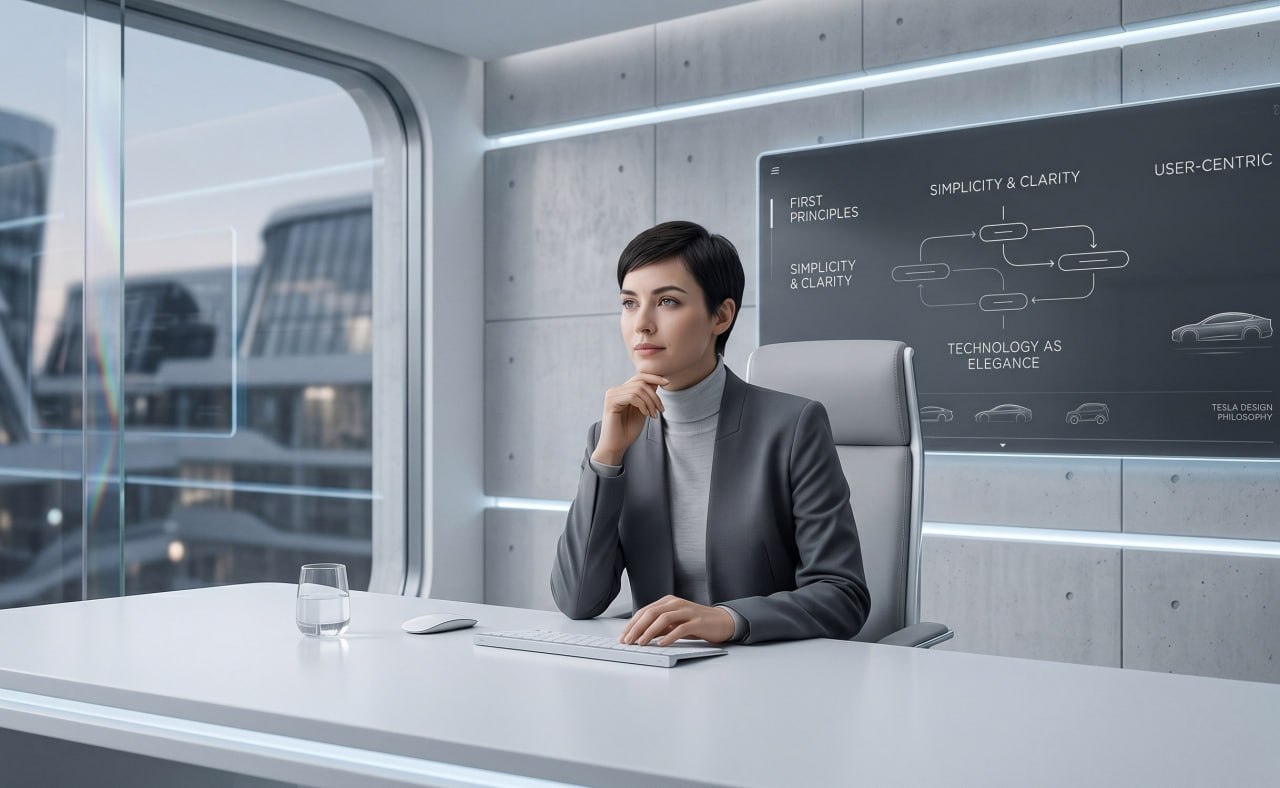
When people talk about Tesla, they usually focus on batteries, acceleration, or autonomous driving. But one of the company’s most recognizable features is its design philosophy. Tesla cars look different from traditional vehicles not because they are trying to appear futuristic, but because the company approaches design as a logical extension of technology and user experience. Minimalism in Tesla is not simply an aesthetic choice. It is part of a broader idea: remove everything that feels unnecessary and allow software, usability, and functionality to define the product.
Minimalism as a Functional Decision
Modern Tesla interiors often surprise first-time drivers. There are almost no physical buttons, no overloaded center console, and very little visual clutter. In models like the Tesla Model 3 or Tesla Model S, the dashboard is reduced to its essentials, with most controls moved into a central touchscreen.
This approach reflects the influence of consumer technology more than traditional automotive design. Tesla vehicles are designed less like classic cars and more like connected digital devices. The company assumes that software can replace many physical interactions, simplifying both production and the driving experience.
The result is polarizing. Some drivers appreciate the clean environment and intuitive interface, while others miss tactile controls and traditional instrument clusters. Yet Tesla’s consistency matters more than universal approval. Every design choice follows the same logic: fewer elements, fewer distractions, and a stronger focus on the core interaction between driver and machine.
UX Before Tradition
One reason Tesla stands apart from many automakers is its prioritization of UX – user experience – over long-established industry conventions.
Traditional car manufacturers often evolve slowly because they inherit decades of engineering habits. Tesla, by contrast, entered the market without that legacy. The company had freedom to rethink how people interact with vehicles from the ground up.
This philosophy appears everywhere. Door handles sit flush with the body to improve aerodynamics and visual simplicity. Software updates continuously change functionality after purchase. The interface behaves more like a smartphone operating system than a static automotive system.
Even the exterior design follows UX principles. Tesla vehicles avoid aggressive lines and excessive detailing. Smooth surfaces improve aerodynamic efficiency, which directly affects electric range. In other words, the minimalist look is not only visual branding – it also serves performance goals.
The influence of Elon Musk is obvious here. Musk has repeatedly emphasized first-principles thinking: questioning why things are done a certain way instead of accepting industry norms. Tesla’s design language reflects that mindset almost everywhere.
The Logic Behind Tesla’s Identity
Tesla’s design philosophy ultimately comes down to coherence. The company wants hardware, software, manufacturing, and branding to feel connected.
A Tesla car does not attempt to communicate luxury in the traditional sense. There are no oversized grilles, decorative chrome elements, or overly complex interiors. Instead, Tesla presents technology itself as the premium feature. Silence, simplicity, responsiveness, and digital integration become part of the brand identity.
This strategy also helps Tesla remain visually recognizable. Even without logos, most people can instantly identify a Tesla on the road. The simplicity becomes a branding tool of its own.
At the same time, Tesla’s philosophy has influenced the broader automotive industry. Many manufacturers now pursue cleaner interiors, larger screens, simplified interfaces, and software-centered ecosystems. What once looked unusual has increasingly become mainstream.
Tesla’s design language may continue evolving, but the underlying principle is unlikely to change: design should remove friction, support functionality, and make technology feel natural rather than mechanical.